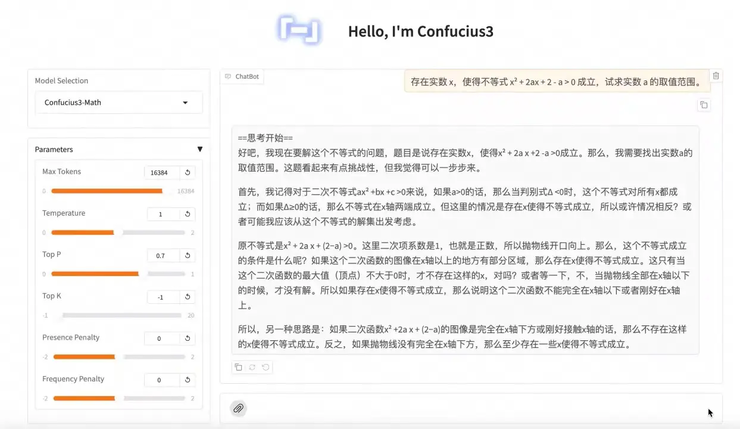
The Internet’s easy-to-proclaims official open-source mathematical models of its “sub” series of large models, becoming the first open-source reasoning model in the country to focus on mathematics education and to be able to operate efficiently on single-scale consumer-grade GPUs. According to an official presentation, the Mathematics Model 3 shows a significant advantage in the task of solving the country’s mathematical problems, with training costs of only $26,000 and reasoning performance approximately 15 times that of DeepSeek R1.

The Mathematic Model 3 achieves excellence in mathematical reasoning, problem resolution and mathematical support through a large-scale enhancement of learning and a range of innovative algorithms. Models support mathematical topics from primary to high school, covering a wide range of fields, such as algebra, conglomeration, probabilities and, in particular, better understanding and resolution of Chinese mathematical issues than similar models.
Thanks to an efficient architecture design, the model can operate well on a consumption-level GPU, with rapid reasoning and low resource occupancy, significantly lowering the threshold for use in educational institutions and personal development. Compared to large generic models such as DeepSeek R1, the “Sub-magnetic Model 3” performed well on multiple data sets such as CK12-math, GAOKAO-Bench (Math), MathBench (K12) and MATH500.
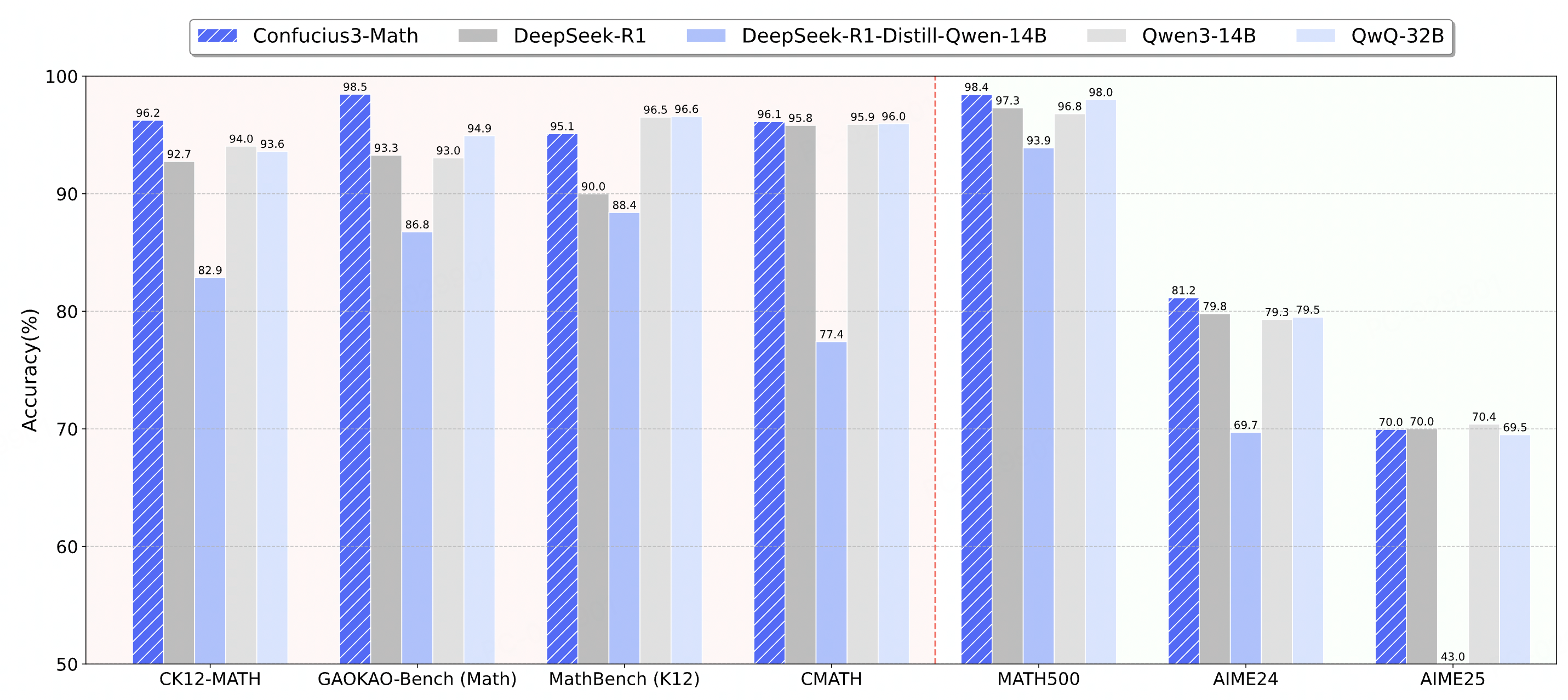
The open-source aspect of the Internet is to promote the inclusion of AI technology in education and to provide new tools for online education, intelligent classrooms and individualized learning. The training cost of $26,000 was much lower than the generalization of millions of dollars, thanks to a breakthrough in data screening and algorithm optimization.
The open source of the easy-to-be-to-reach “second-to-third mathematical model” provides low-cost, high-performance AI solutions in the field of education, marking the acceleration of the penetration of large-scale modelling technologies into the mathematical education landscape. Not only have technical barriers to AI education been reduced, they also provide a replicable model for global developers.